Building REST APIs is a core skill for backend developers, especially when working with Spring Boot. However, writing APIs that are scalable, maintainable, and clean requires following certain best practices. In this article, we’ll explore the key principles to design professional REST APIs using Spring Boot.
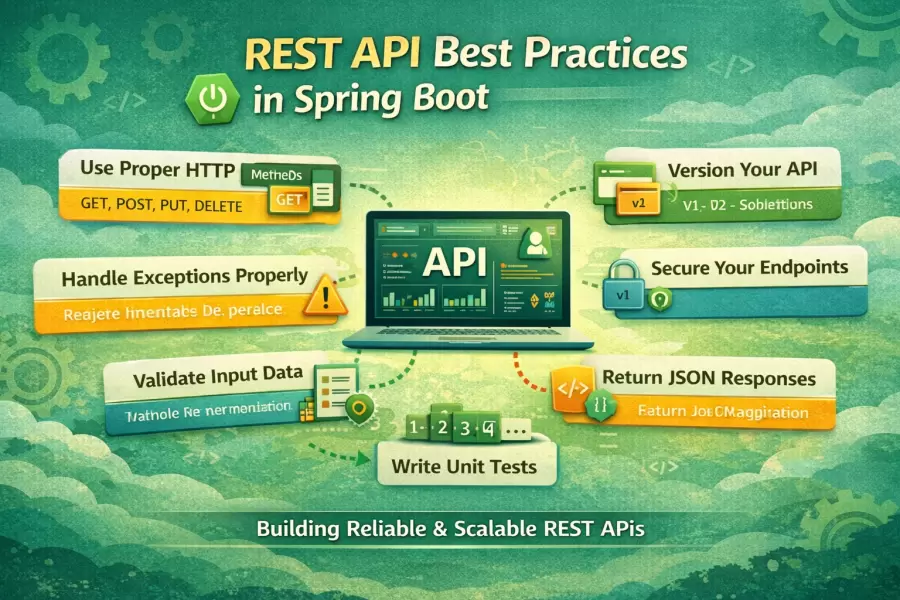
⚙️ 1. Use Proper HTTP Methods
Each HTTP method has a specific purpose:
- GET → Retrieve data
- POST → Create new resource
- PUT → Update existing resource
- DELETE → Remove resource
Using them correctly improves API clarity and consistency.
🔗 2. Design Clean and Meaningful URLs
Good API design is resource-based:
users-
/users/{id}
Avoid verbs in URLs:
- ❌
/getUsers - ❌
/deleteUser
⚠️ 3. Implement Global Exception Handling
Handling errors properly is crucial.
Use @ControllerAdvice in Spring Boot to:
- Centralize error handling
- Return consistent error responses
- Improve debugging
📦 4. Use DTOs Instead of Entities
Entities represent database structure, but APIs should expose only required data.
DTOs help:
- Hide sensitive fields
- Customize responses
- Decouple API from database
📊 5. Return Proper HTTP Status Codes
Status codes improve communication between backend and frontend:
- 200 OK
- 201 Created
- 400 Bad Request
- 404 Not Found
- 500 Internal Server Error
🔐 6. Version Your APIs
Versioning ensures backward compatibility:
Example:
/api/v1/users
🛡️ 7. Add Basic Security
Secure your APIs with:
- Authentication (JWT/OAuth)
- Input validation
- Rate limiting
🚀 Conclusion
Following REST API best practices in Spring Boot helps you build scalable and maintainable applications.
By using proper HTTP methods, clean URLs, DTOs, and structured error handling, you can create APIs that are both developer-friendly and production-ready.
If you found this helpful, share it with your developer friends and follow for more backend development content
Tags
Want a complete structured Java learning path?
Explore our courses and bundles designed for clarity and real backend learning.
Browse Courses View Bundle